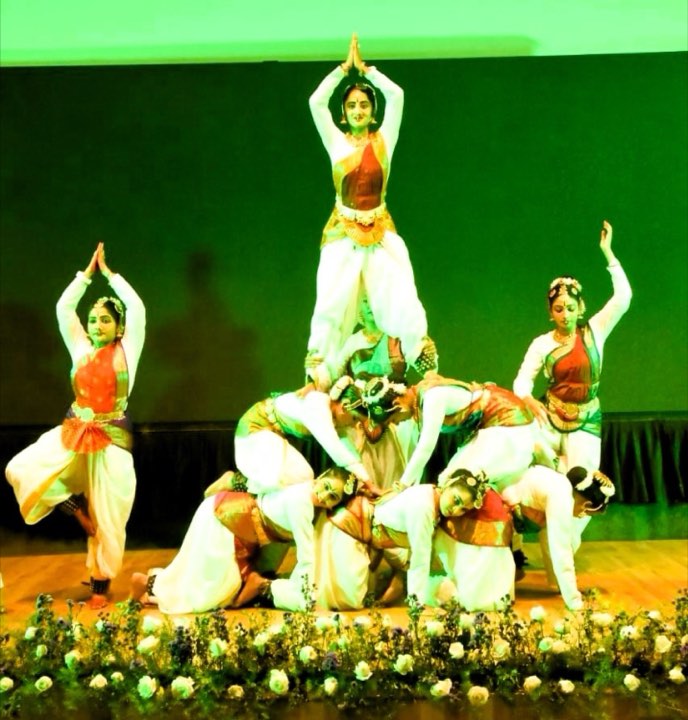

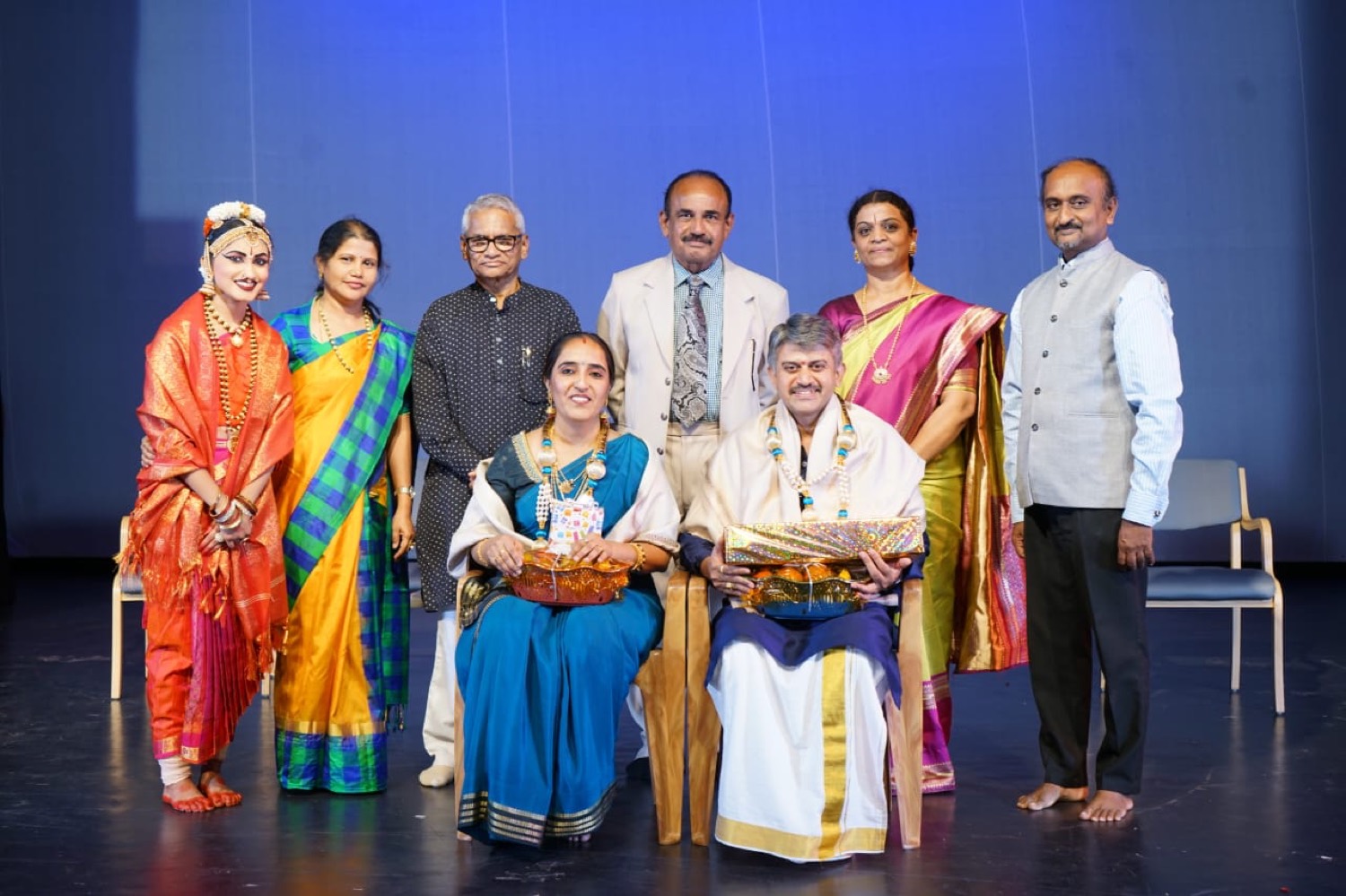
Ranga is the stage. Pravesha is entry. The word means exactly what it says: the day a dancer enters the stage — not as a student appearing in a group item, but alone, for a full-length programme, in front of an audience that includes senior artists who know precisely what they are watching.
It is often described in English as a graduation. That is the one word we would ask families to avoid. A graduation marks the end of a course. A rangapravesha marks the moment a dancer becomes responsible for their own art — and almost everyone who does one keeps learning afterwards, usually for the rest of their life.
What the day contains
A full solo margam is a long-form structure, and it is deliberately arranged to test different faculties in sequence. Broadly, the dancer moves from pure rhythmic work into pieces that demand sustained expression, then into a centrepiece that demands both at once, and finally into lighter, devotional and concluding items.
The centre of the evening is the varnam. It can run past half an hour. It asks a dancer to hold rhythmic precision and emotional continuity simultaneously, without visible effort, for longer than most people can hold their attention. Nothing else in the training prepares you for it except doing it.
A rangapravesha is not the reward at the end of the training. It is the first examination the training was for.
What it asks of the student
- Years, not months. By the time a student is ready, they have usually been in class for the better part of a decade. There is no shortening this, and we do not try.
- Stamina. The physical demand is real. A dancer must be able to complete the entire programme with the last item as clean as the first.
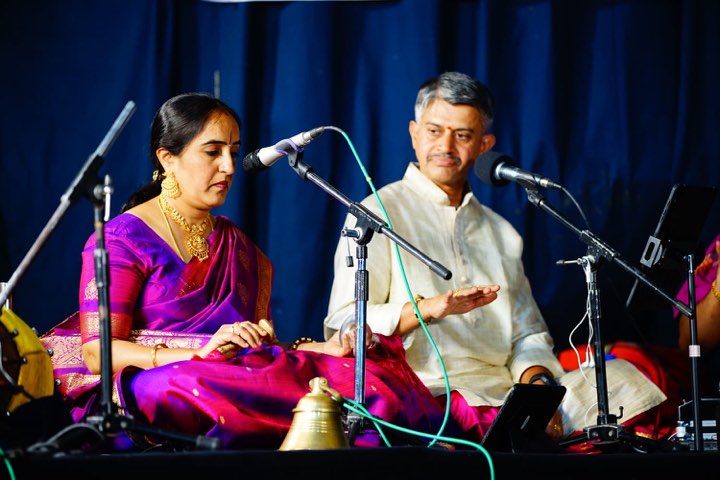
- Memory under pressure. The whole margam is carried in the body and the mind, with live musicians and no second take.
- Composure. Something always goes slightly wrong. The training is what lets a dancer absorb it without the audience ever knowing.
What it asks of the family
More than families expect, and less than they fear. In the year leading up to it, practice increases sharply and other commitments have to give way. There is a live orchestra to arrange, a venue, costume, and the hundred small logistics of a public event. We guide families through all of it — we have done this thirty-eight times.
The part we ask families to take most seriously is not logistical. It is holding steady in the two or three years before the year of the rangapravesha, when the work is hardest and least visible, and when a student is most likely to want to stop.
When is a student ready?
The guru decides, and the guru decides late rather than early. We have never regretted asking a student to wait another year. We would regret the opposite.
Readiness is not a mark on a paper. It is whether the dancer can carry a stage alone — whether the technique is secure enough to become invisible, and whether the abhinaya has matured past imitation into something the dancer actually means.
And afterwards
Many of our students continue straight into advanced repertoire, university examinations at the vidwath level, graded auditions for Doordarshan and All India Radio, and scholarship applications. A good number have gone on to teach and perform in their own right, and to bring their own students to us.
That is the actual point of the day. Not a certificate. A dancer who can now stand on a stage and be trusted with an art that has been handed down, hand to hand, for a very long time.
If your child is training with us and you have questions about their path towards a rangapravesha, speak to the gurus directly — we would far rather have the conversation early. Get in touch.