The body of the form
- Adavus, korvais and jathis
- Araimandi, balance and stamina
- Nritta, nritya and natya
- Abhinaya and the nava rasas
- Full-length margam repertoire

Home / Learn
Two full courses — Bharatanatyam and Carnatic classical music — each taught with its complete theory, its repertoire, and the stage practice that finishes an artist.
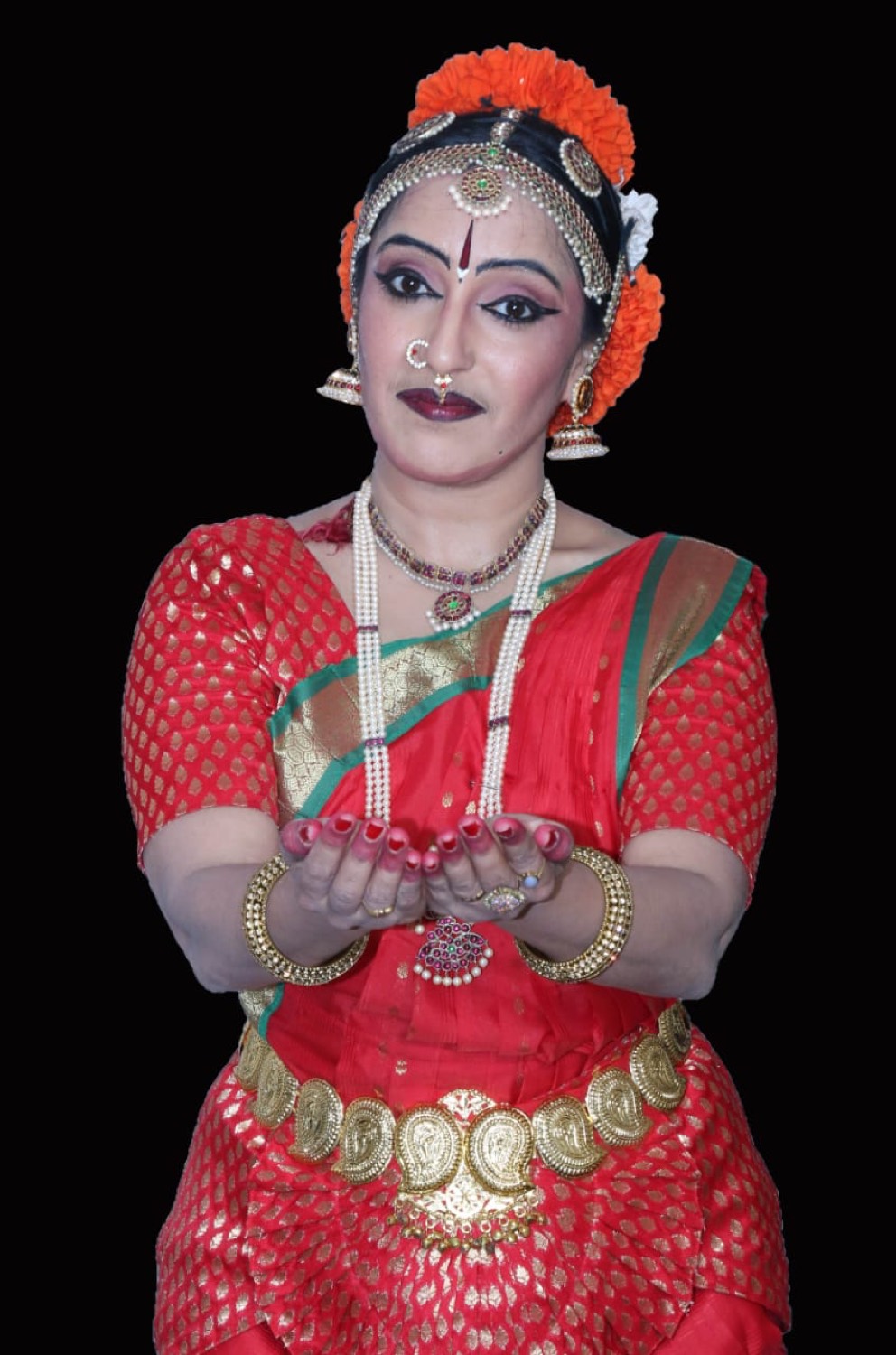
Course one
The complete theoretical and practical knowledge of Bharatanatyam — taught from the first adavu through to a full-length solo margam, and beyond it into choreography.
Students begin with the body: stance, balance, the adavu vocabulary and the discipline of araimandi. Rhythm arrives with jathis and korvais; expression arrives with abhinaya, the nava rasas, and the stories that give a gesture its meaning.
Around that core, the course carries what a dancer genuinely needs to know — the puranas the repertoire is drawn from, the temple sculpture and history the form grew out of, folk styles of Karnataka, and yoga practised alongside dance.
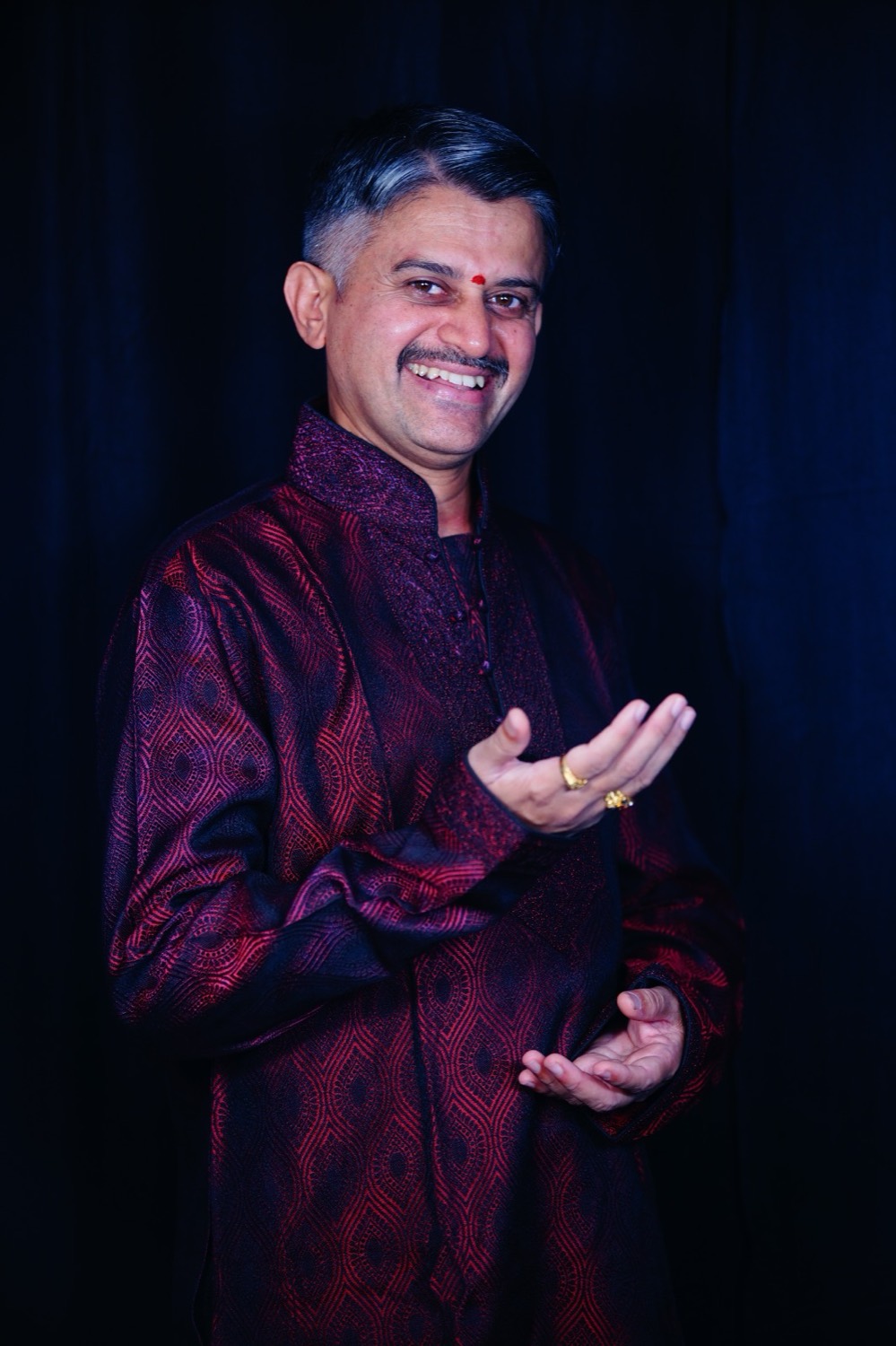
Course two
Complete theoretical and practical training in Carnatic classical vocal, devotional song, and the Carnatic keyboard.
Vocal training begins at the beginning — sarali varise, jantai, alankaras — and proceeds through geethams, swarajathis, varnams and kritis into concert repertoire. Voice culture runs throughout; manodharma is introduced when the foundation can hold it.
The keyboard course teaches the Carnatic system on a fixed-pitch instrument: how gamaka is produced, how to accompany, and how to hold a line on a classical stage. Devotional repertoire — devaranamas, bhajans and stotras — runs alongside both.
Progression
There is no fixed clock. A student advances when the guru judges them ready — but the milestones below are the ones nearly everyone passes through.
The first years. Basic adavus or basic varise, posture and shruti, and the habit of daily practice. Students perform for the first time at Nada Mukula or Nadopasana.
Repertoire builds and the theory papers begin. Students sit the Junior and Senior examinations conducted annually by Gangubai Hangal Music University.
The advanced grades. Full-length repertoire, deeper theory, and preparation for scholarships and for the graded auditions of Doordarshan and All India Radio.
The full-fledged solo debut — a complete programme presented before an audience and senior artists. Thirty-eight students of the academy have now accomplished theirs.
Many disciples go on to teach and perform in their own right. The academy remains their guru's house.
Prizes are awarded every year to the students who score the highest marks in the music and dance examinations.
Wherever you are
Several students outside India train at NAMD in Bharatanatyam and Carnatic classical vocal through virtual classes. The syllabus does not change and neither does the standard — only the room does.
Online students follow the same progression, sit the same examinations where they are able to, and are expected at the annual festival whenever they can travel for it.
For institutions
Both gurus conduct workshops, seminars and lecture demonstrations on art and culture for schools, colleges and cultural bodies — covering the history of the forms, the navarasa and the ragas, mudras, yoga, temple architecture and the classical dances and music of India.
Theme-based dance ensembles have also been conceived and choreographed on commission for international conferences — on climate change, sustainable development, women's empowerment and Ayurveda.
Admissions
Beginners from around age five, adults returning to an art they left, and overseas students online — tell us where you're starting from and we'll tell you honestly what it will take.